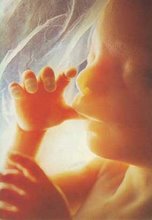
EXCERPT "On this basis, it falls to me today to speak a calm and firm word to those who bear the grave responsibility of legally ordering social coexistence. This coexistence can be threatened by the throwaway culture, as Pope Francis so often warned (cf. Address to the Plenary Assembly of the Pontifical Academy for Life, 27 September 2021). In this sense, if life ceases to be recognized as a fundamental value, what future can our societies have? Can a community that casts into the shadows the unborn child, the elderly, the sick, those who suffer in silence, or those who depend entirely on the care of others be called fully just? The defense of human life is neither a partisan issue nor a confessional interest: it is a goal of civilization. Every human life must be recognized and safeguarded from conception to its natural end, in every circumstance of its existence. When this certainty is obscured, the most vulnerable are the first victims, and the law loses its deepest meaning: to serve and protect every person. For this reason, the moral greatness of a nation is manifested, above all, in its capacity to accompany, protect and love those lives that are most fragile. The common good is, in a certain sense, the “social expression of the dignity recognized in every person” (Magnifica Humanitas, 59). It does not consist in the mere sum of particular interests, but rather in “the sum of those conditions of social life which allow social groups and their individual members relatively thorough and ready access to their own fulfillment” (Gaudium et Spes, 26). When the common good ceases to be a shared horizon, public action runs the risk of fragmenting into partial interests, incapable of safeguarding what belongs to all. In this context, the family — the primary human reality and the natural foundation of the community — takes on particular importance. In the home, generations intertwine and a living memory is passed on, giving inner continuity to society. Where the family is upheld, the spiritual and social stability of nations is also strengthened. The family will always be the first school of humanity, where one learns, before anywhere else, the basic grammar of living together: welcoming life, caring for others, forgiving, serving and belonging". |
.png/250px-Pope_Leo_XIV_3_(3x4_cropped).png)